
VICTORIA STREET
Can we create a flexible, multi-tenant workspace within the constraints of a 1970’s building designed for a single occupier?
Location: London, Westminster
Status: Construction
Architect: TP Bennett
Client: Kirkglade Ltd
Structural Design Brief
-
Relocate building core to create an additional entrance on the plaza
-
Creating additional area through atrium infills and roof extensions, delivered with a CLT structure
-
Creating double height spaces and roof terraces to provide modern amenity.
-
Retail units to remain fully operational throughout.
Introduction
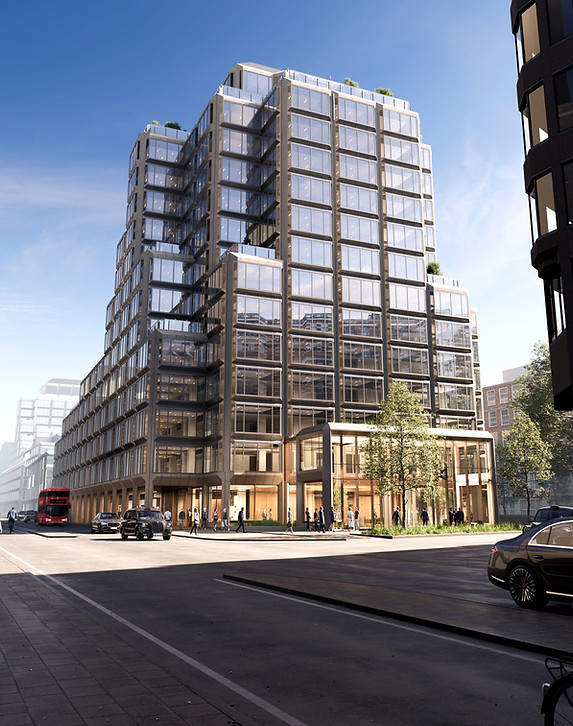
After it’s completion by architects Elsom, Pack and Roberts, 171 Victoria Street was described by the "crystalline form of clustered prisms”. The rigour of the buildings structural form creates both opportunity and constraints. The design aims to deliver a high specification upgrade of the existing 1970s former John Lewis headquarters to provide modern commercial workspace. The constrained floor heights, deep floor plates and dense column grid counter what would form the base of most new build offices, needing a different approach to make a welcome, flexible space.
The scheme creates enhanced receptions- with a signature Western entrance pavilion- new terraces and greening, welfare facilities, façade replacement, upgraded service provision and end of trip facilities- and with the new crown to the tower delivering premium spaces exceptional views. These features coupled with the large floor plates at the lower levels will deliver a workspace suitable for multiple tenants or a corporate HQ.
The site features a fifteen-storey tower rising from a larger six storey block with double basement. The existing structure is reinforced concrete with an array of interesting features such as bespoke ‘pacman’ shaped columns, column transfers, shaped precast edge beams and a long span tapering PT slab. The unique geometry of the columns and slab edges plus the existing construction tolerances have required bespoke solutions at the interfaces between new and existing structure.
Solution
One of the greatest design challenges was how to infill the existing atriums without triggering the need for significant foundation works. Using a lightweight steel and CLT frame, LSL (working closely with A2 studio) were able to justify the existing piled raft and post-tensioned transfer slab for the new load distribution. Only minor enhancement to the B2 raft was required using a thin over-raft slab and transfer wall. As with many of our refurbishment projects, much of our role has been performing options studies and analysis to advise on where best to modify the existing structure and where better to avoid intervention and challenge the brief.


